You found Meng Wang!

I am a Ph.D. student at the School of Automation Science and Electrical Engineering, Beihang University, supervised by Prof. Lei Guo, Prof. Xiang Yu, and Prof. Kexin Guo. In 2020, I received my B.Eng. in Automation from Northwestern Polytechnical University (rank first) and was subsequently admitted to Beihang University.

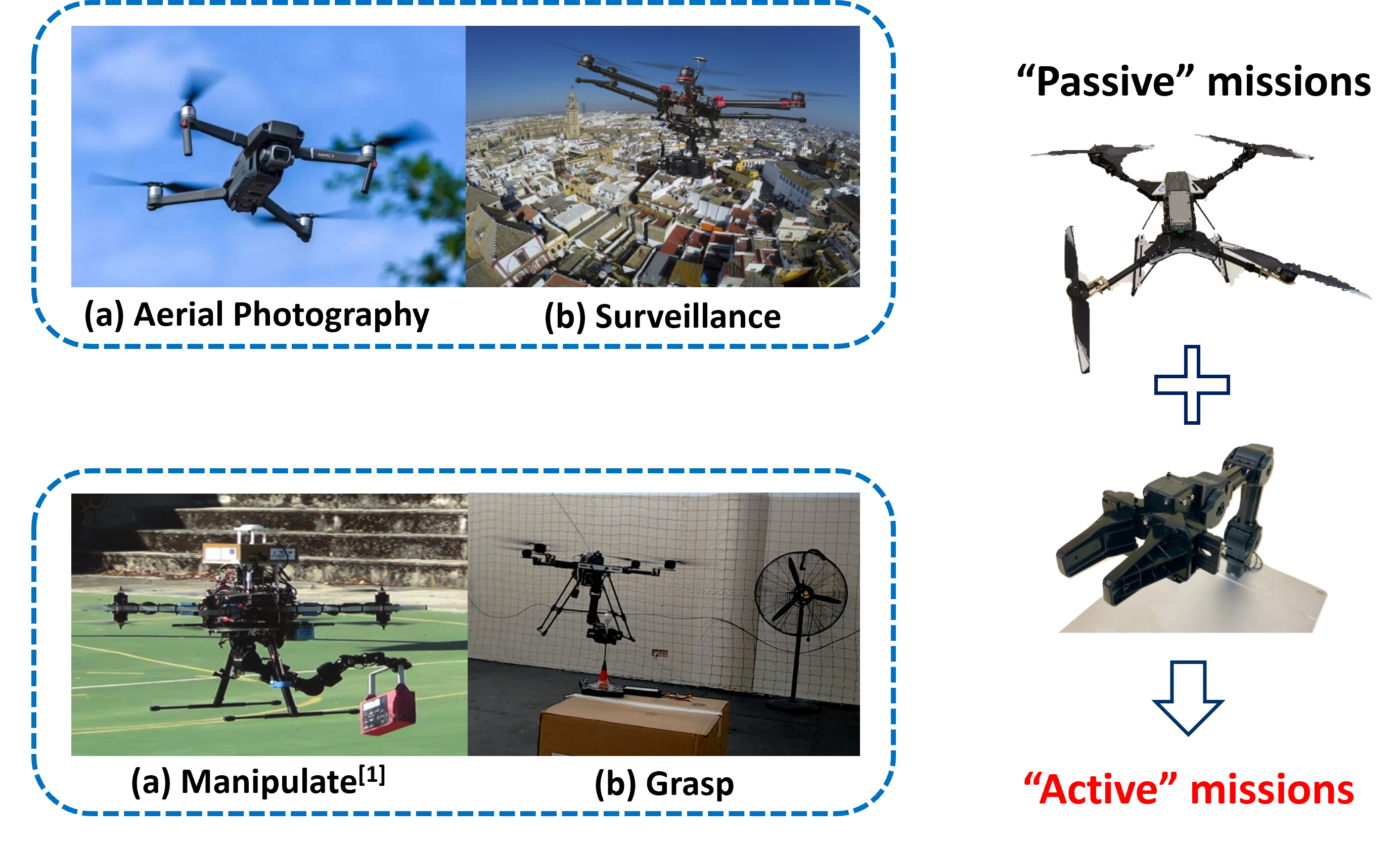
Aerial manipulators, which combine a multirotor with a multi-DoF manipulator, offer both high mobility and active manipulation capability. The active feature of aerial manipulator propels applications into more complicated interactive scenarios. It is not a far stretch that aerial manipulator is applied to obstacles removing, components transporting, and infrastructure restoring. However, aerial manipulators deployed in the real world inevitably face uncertainties caused by internal model mismatch, dynamic coupling effects, and external unmeasured disturbances. The topic of my Ph.D. research is intelligent control, cooperative plan, and dexterous operation of aerial manipulator.


Publications

Dynamically aerial capturing with centimeter-level accuracy

Dynamically aerial capturing with centimeter-level accuracy

Under Review (JCR Q1 IF:19.7), 2025

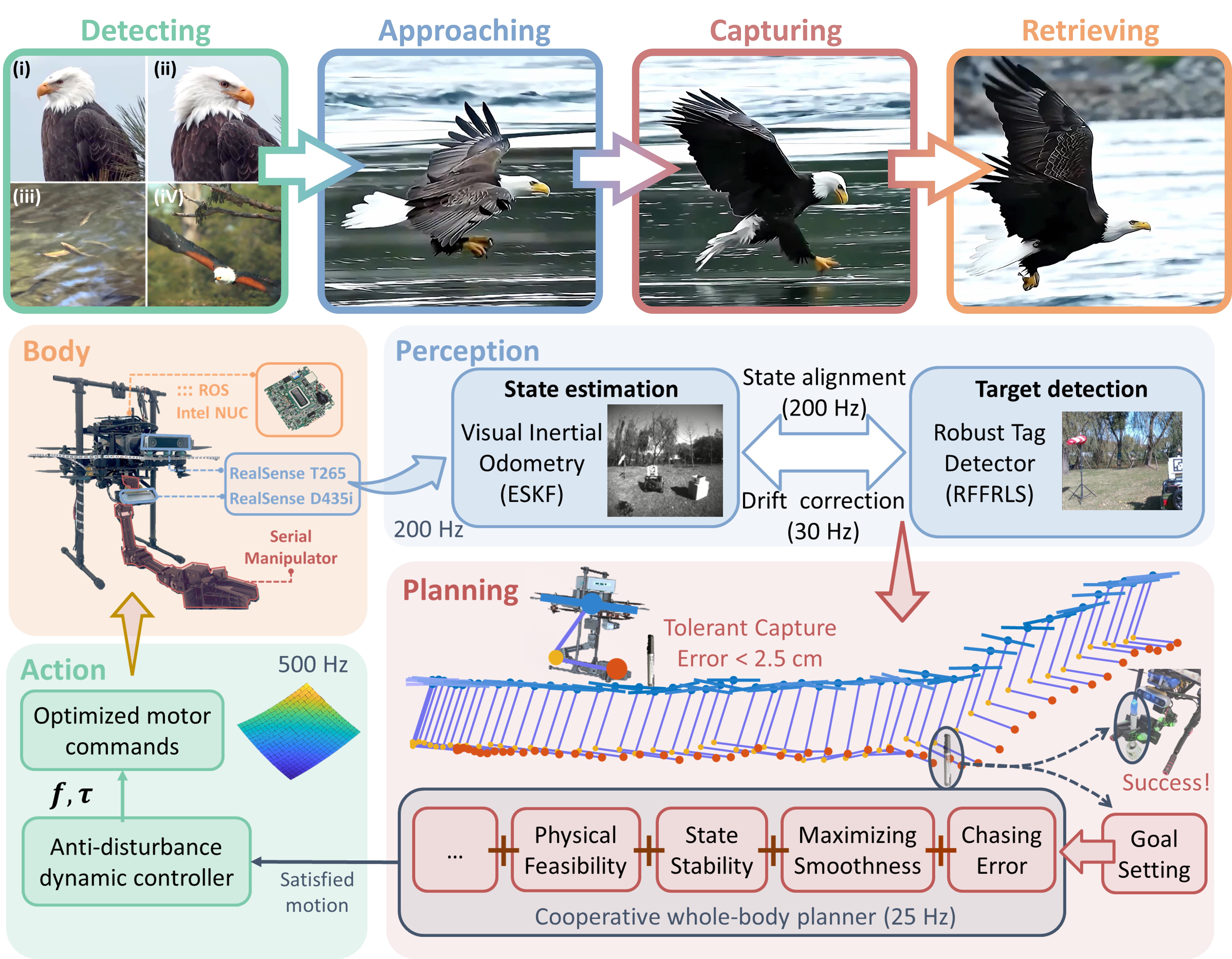
Current aerial manipulation platforms often sacrifice interaction precision for flight agility, depend on external localization, or are limited to quasi-static conditions. In this work, we develop a groundbreaking system named CAPTURER (Capturing Active Pen-sized Target via Unified and Robust Eagle-like Robot). Inspired by raptor morphology, CAPTURER achieves-for the first time dynamic capture of actively moving pen-sized targets, combining high agility with exceptional precision.
A Learning-Enhanced Control Scheme for Aerial Manipulator Under Composite Disturbances

A Learning-Enhanced Control Scheme for Aerial Manipulator Under Composite Disturbances

Under Review (JCR Q1 IF:6.3), 2025

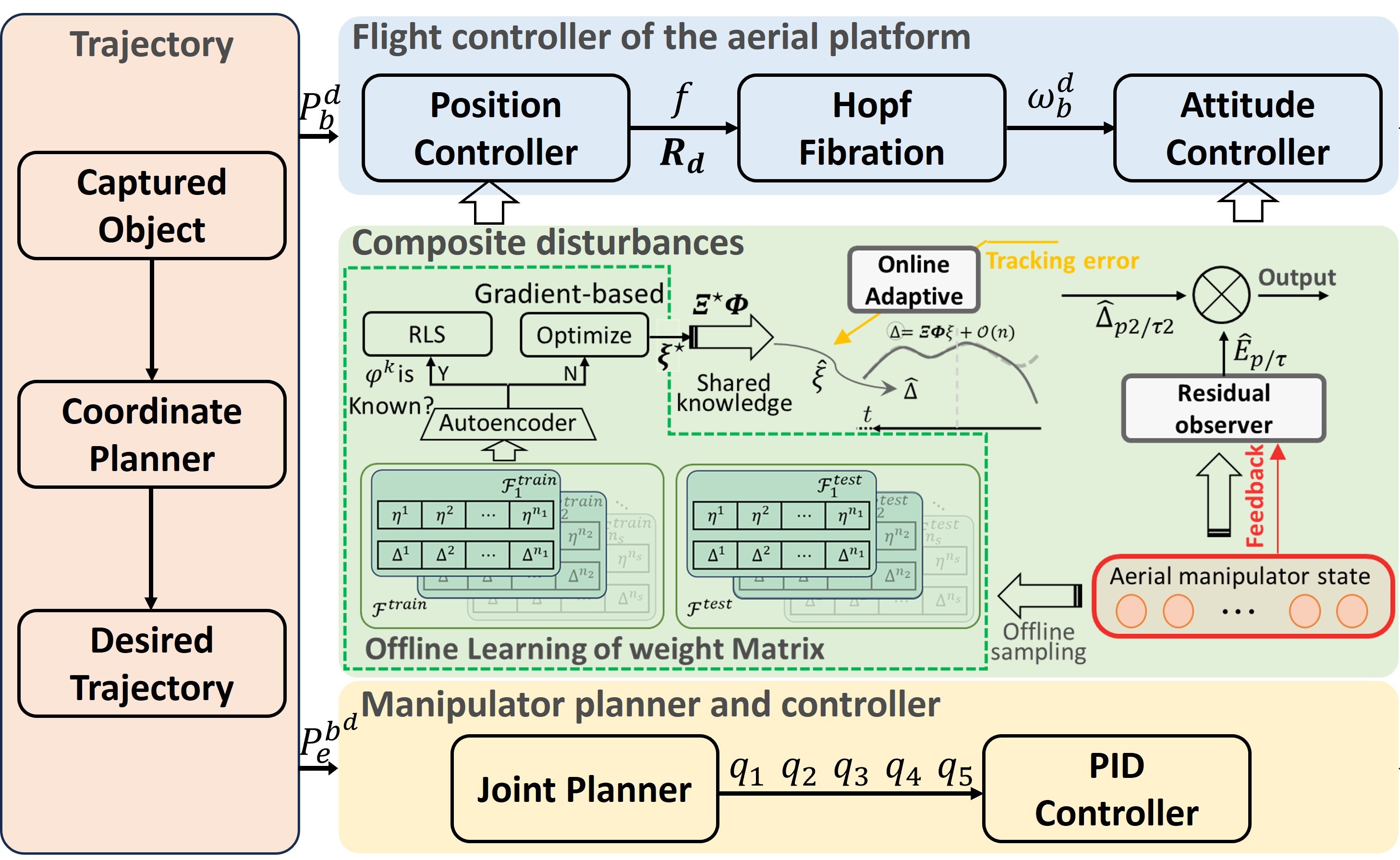
This paper proposes a framework that combines learning-based approximation with observer-based compensation to address composite disturbances including unknown high-order nonlinear coupling effects and external wind disturbances.

Learning-based Observer for Coupled Disturbance

Learning-based Observer for Coupled Disturbance

The International Conference on Robotics and Automation (ICRA), Under Review, 2026

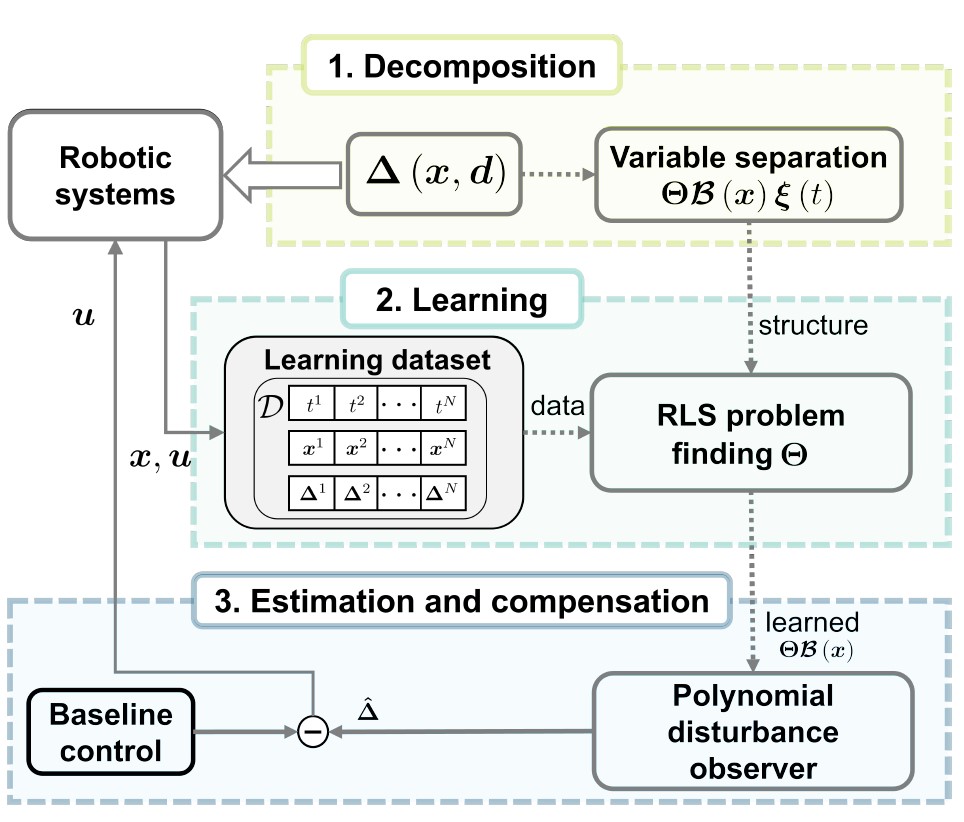
This study introduces an effective and convergent algorithm enabling accurate estimation of the coupled disturbance via combining control and learning philosophies. Concretely, by resorting to Chebyshev series expansion, the coupled disturbance is effectively decomposed into an unknown parameter matrix and two known structures dependent on system state and external disturbance respectively. A RLS-based process is subsequently formalized to learn the parameter matrix using historical time-series data. Finally, a polynomial disturbance observer is devised to achieve a high-precision estimation of the coupled disturbance by utilizing the learned structure.

Millimeter-level pick and peg-in-hole task achieved by aerial manipulator

Millimeter-level pick and peg-in-hole task achieved by aerial manipulator

IEEE Transactions on Robotics, vol 40, pp 1248-1260. (JCR Q1 IF:10.5), 2024

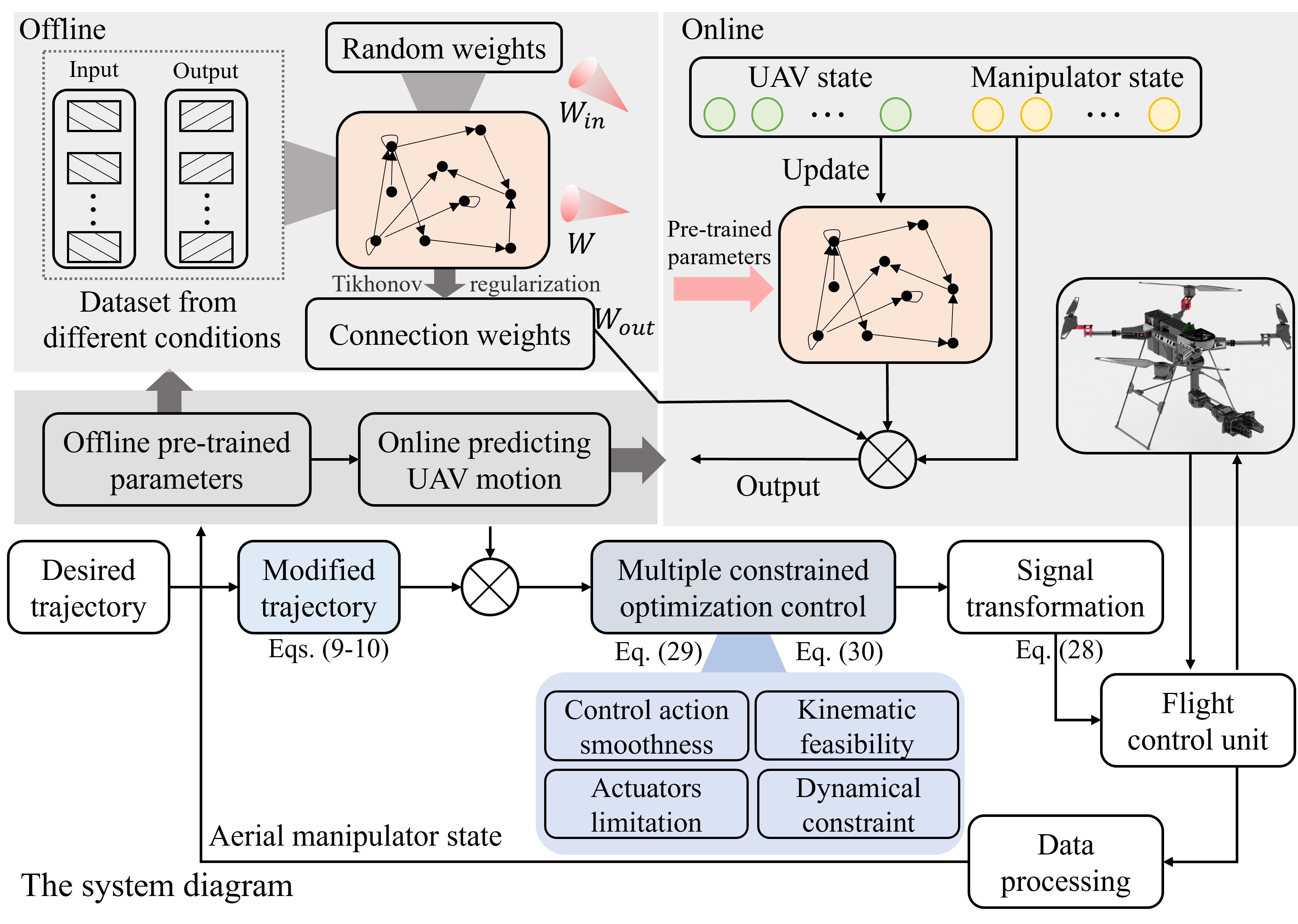
Building upon the philosophy of disturbance rejection, we propose a predictive optimization scheme that allows aerial manipulator to successfully execute millimeter-level flying pick and peg-in-hole task. Specially, a learning-based approach is leveraged to promptly predict the UAV platform motion by incorporating pretrained parameters. On the basis of the prediction information, multiple constraints are incorporated in the controller design phase under floatingbase disturbance.

Precise End-Effector Control for an Aerial Manipulator Under Composite Disturbances: Theory and Experiments

Precise End-Effector Control for an Aerial Manipulator Under Composite Disturbances: Theory and Experiments

IEEE TTransactions on Automation Science and Engineering, vol 22, pp 4006-4021. (JCR Q1 IF:6.4), 2025

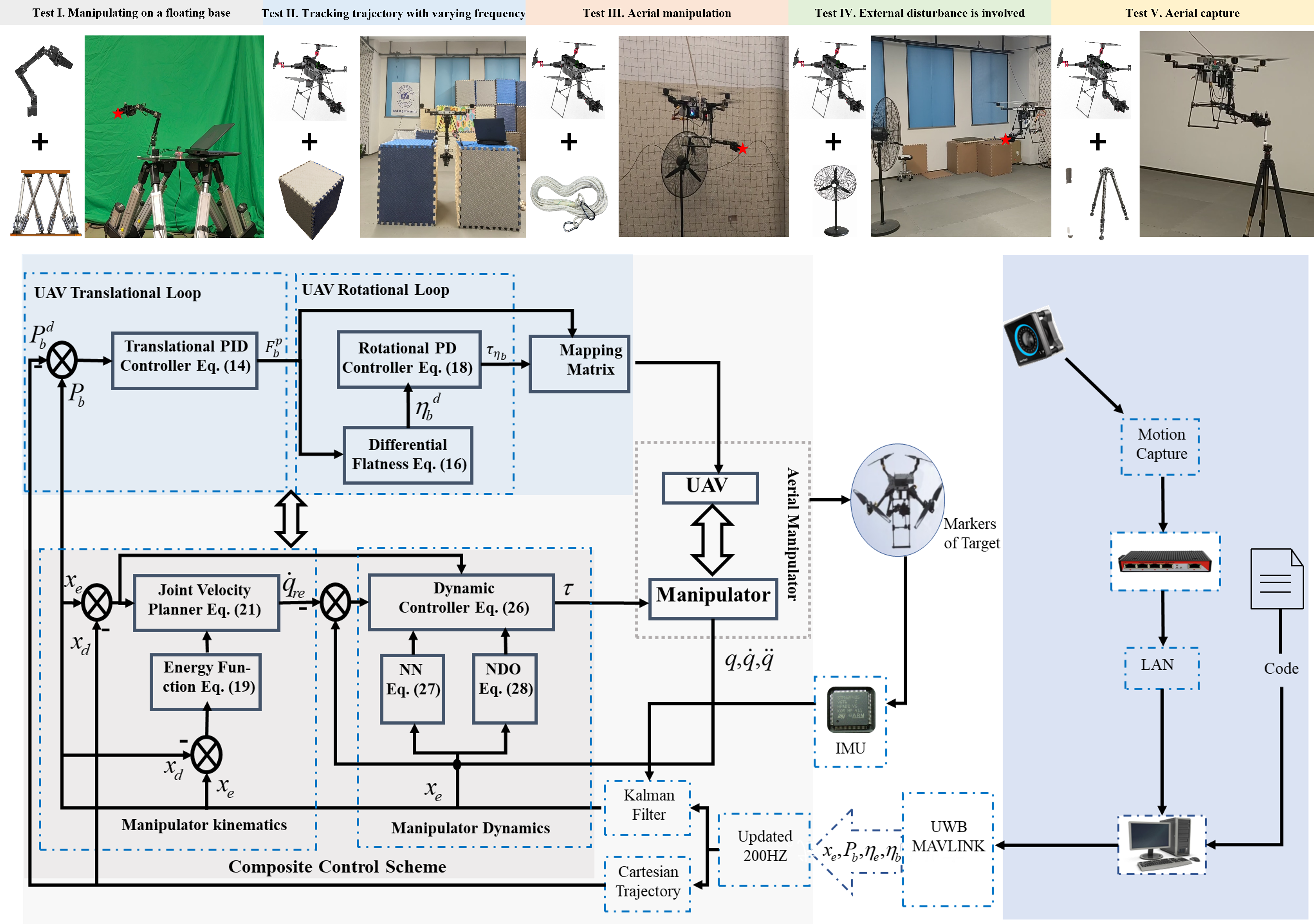
A composite control scheme is constructed, which consists of the manipulator joint velocity planner and the dynamic controller. The joint velocity is generated to counteract the fluctuation of the aerial platform. The dynamic controller is developed to accurately track the planned joint velocity in the presence of strong coupling and model uncertainties.

Feedback favors the generalization of neural ODEs

Feedback favors the generalization of neural ODEs

International Conference on Learning Representations (ICLR), 2025 Oral Presentation

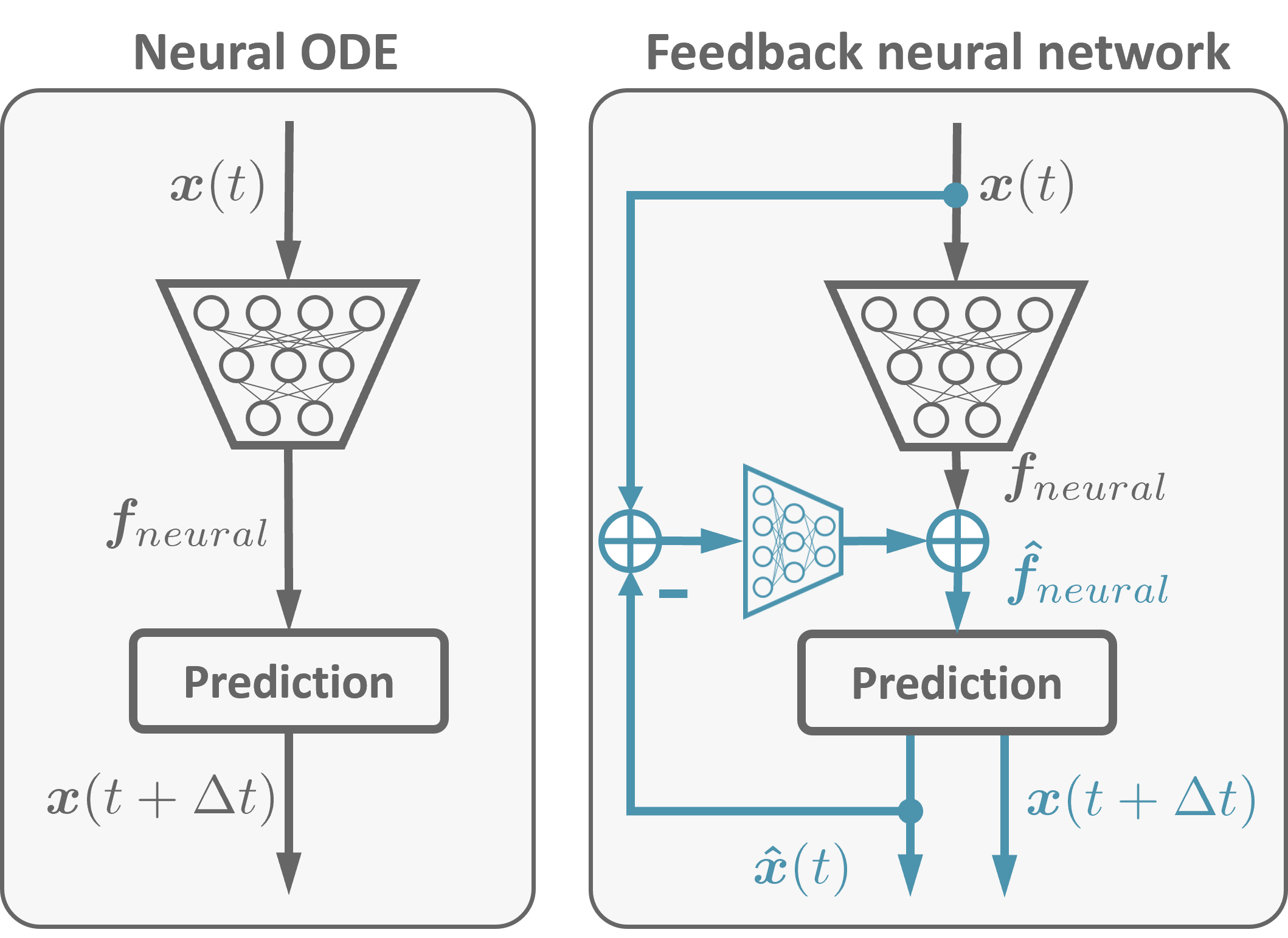
We present feedback neural networks, showing that a feedback loop can flexibly correct the learned latent dynamics of neural ordinary differential equations (neural ODEs), leading to a prominent generalization improvement.

Fault Separation Based on An Excitation Operator With Application to a Quadrotor UAV

Fault Separation Based on An Excitation Operator With Application to a Quadrotor UAV

IEEE Transactions on Aerospace and Electronic Systems, vol 60, pp 4010-4022. (JCR Q1 IF:6.4), 2024

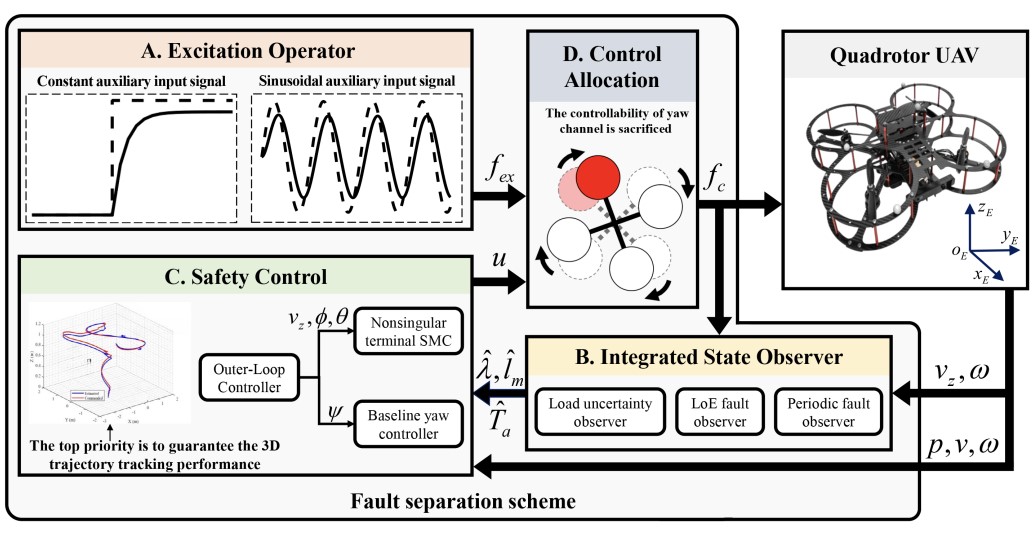
This article presents an excitation operator-based fault separation architecture for a quadrotor subject to loss of effectiveness faults, actuator aging, and load uncertainty.

Design of an Aerial Manipulator System Applied to Capture Missions

Design of an Aerial Manipulator System Applied to Capture Missions

International Conference on Unmanned Aircraft Systems (ICUAS), 2021 Oral Presentation

This paper proposes the design of an aerial manipulator system for capture missions.